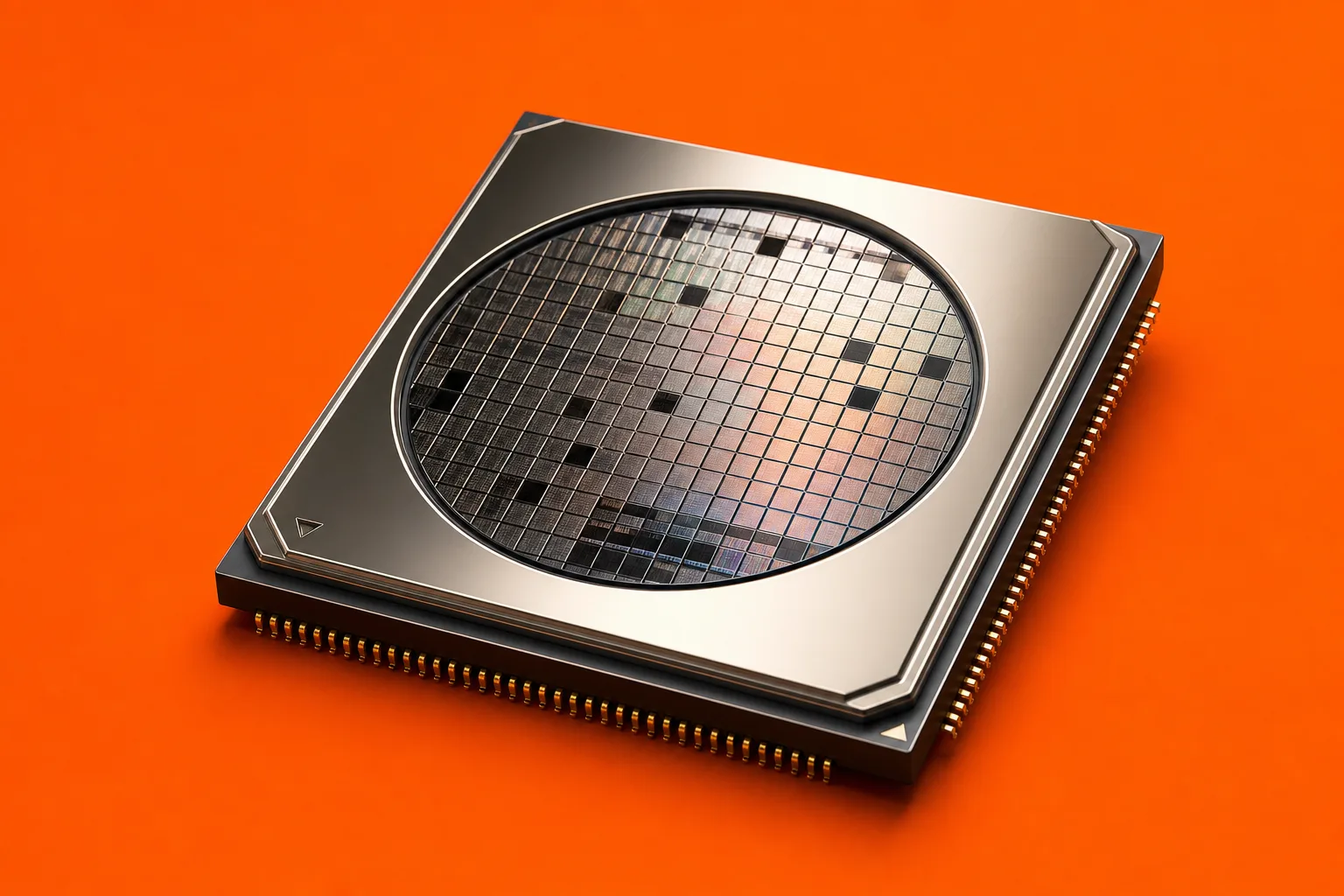
TSMC stock remains one of the market’s most closely watched AI infrastructure trades after a powerful first-quarter showing. Shares were recently trading at $403.79, about 4.3% below the 52-week high of $421.97, after quarterly revenue climbed 35.13% year over year to TWD 1.13 trillion.
The headline numbers were even stronger below the top line. Net income rose 58.33% to TWD 572.48 billion, while net profit margin reached 50.48%, underscoring how much pricing power and operating leverage the company still holds at the leading edge of semiconductor manufacturing.
For investors, the debate has shifted from whether demand is strong to whether TSMC can sustain margin expansion and valuation support as overseas expansion, AI infrastructure bottlenecks and geopolitical risk become more prominent.
Key Facts
- TSMC reported Q1 FY2026 revenue of TWD 1.13 trillion, up 35.13% from a year earlier.
- Net income reached TWD 572.48 billion, an increase of 58.33%, with net profit margin at 50.48%.
- Shares were trading at $403.79, versus a 52-week range of $190.03 to $421.97.
- Free cash flow rose 26.61% year over year to TWD 263.79 billion, while operating cash flow totaled TWD 698.98 billion.
- Consensus valuation cited in the market points to a fair-value range near $468 to $491, depending on earnings and multiple assumptions.
TSMC Stock Forecast
TSMC’s latest quarter reinforced its status as the most important contract chipmaker in the AI supply chain. The company sits at the center of demand for advanced processors used in data centers, AI accelerators and premium consumer devices. That position has helped support a market capitalization near $1.8 trillion and a premium valuation, with the stock trading at roughly 33.75 times trailing earnings and about 25.7 times forward earnings.
The bullish case rests on a straightforward idea: the AI buildout is still in full swing, and TSMC remains the key manufacturing partner for many of the industry’s most valuable chip designers. High-performance computing has become the main growth engine, and the company’s advanced-node leadership continues to separate it from rivals. Revenue growth of roughly 32% for FY2026 and consensus EPS estimates of $15.61 for FY2026 and $19.52 for FY2027 reflect expectations that this demand will remain durable.
What matters now is whether extraordinary profitability can keep improving. Gross margin reached 66.2% in the quarter, a remarkable figure for a foundry business. But management has also warned that overseas fab ramps will dilute margins, with a 2% to 3% hit in FY2026 and a larger impact later in the decade. That means investors may need to think less about limitless expansion and more about whether TSMC can defend a plateau in the mid-60% range while still funding the next phase of capacity growth.
TSMC’s quarter showed that AI chip demand remains powerful, but the next move in the stock depends on whether growth can outpace the rising cost of global expansion.
Why margins and capacity matter now
The company is investing at a historic pace. FY2026 capital spending is projected at $52 billion to $56 billion, with additional advanced-node capacity being added in Taiwan and a $20 billion expansion in Arizona approved in May 2026. Those investments are designed to secure long-term leadership, but they also increase depreciation and raise the risk that returns moderate if end-market demand becomes less efficient.
Packaging is another critical advantage. TSMC’s position in advanced packaging technologies such as CoWoS gives it leverage beyond wafer fabrication alone, especially as AI chips become larger, more complex and more dependent on memory integration and interconnect efficiency. That expands the company’s moat, but it also raises investor expectations for flawless execution.
Implications for Investors
For portfolios, TSMC still offers one of the clearest ways to gain exposure to AI semiconductor demand without taking direct single-product risk on a chip designer. The company benefits from broad customer exposure across AI, smartphones, networking and high-performance computing. Its balance sheet remains solid, with total assets of TWD 8.66 trillion against liabilities of TWD 2.73 trillion, and return metrics remain unusually strong for a cyclical industry.
Still, risk factors are becoming more specific. One of the most important is not chip demand itself, but the physical ability of customers to deploy AI infrastructure. Delays in data-center projects tied to grid power, utility capacity and zoning could slow the pace at which hyperscalers absorb advanced processors. If that bottleneck persists into late FY2026 and FY2027, the result could be a mismatch between TSMC’s aggressive supply buildout and slower real-world deployment.
Investors should also watch customer concentration and competitive diversification. Large customers have strong incentives to develop backup foundry options over time, even if alternatives remain technologically behind. In addition, Taiwan Strait tensions continue to cap how much valuation expansion the stock can command versus other AI leaders. That geopolitical discount is unlikely to disappear, even with stronger overseas manufacturing capacity.
From a valuation standpoint, the current setup suggests a more balanced risk-reward profile than earlier in the rally. A target near $468 implies roughly 18% upside from $403.79, while a more optimistic framework reaches about $491. On the downside, a weaker demand or margin scenario could justify materially lower levels if earnings estimates are cut and multiples compress. That makes execution, customer capex guidance and margin commentary the key market-moving variables over the next several quarters.
TSMC remains a high-quality AI supply chain leader, but the easy part of the re-rating may be over. The next phase for the stock will likely depend on whether demand, margins and infrastructure deployment stay aligned through 2026 and 2027.