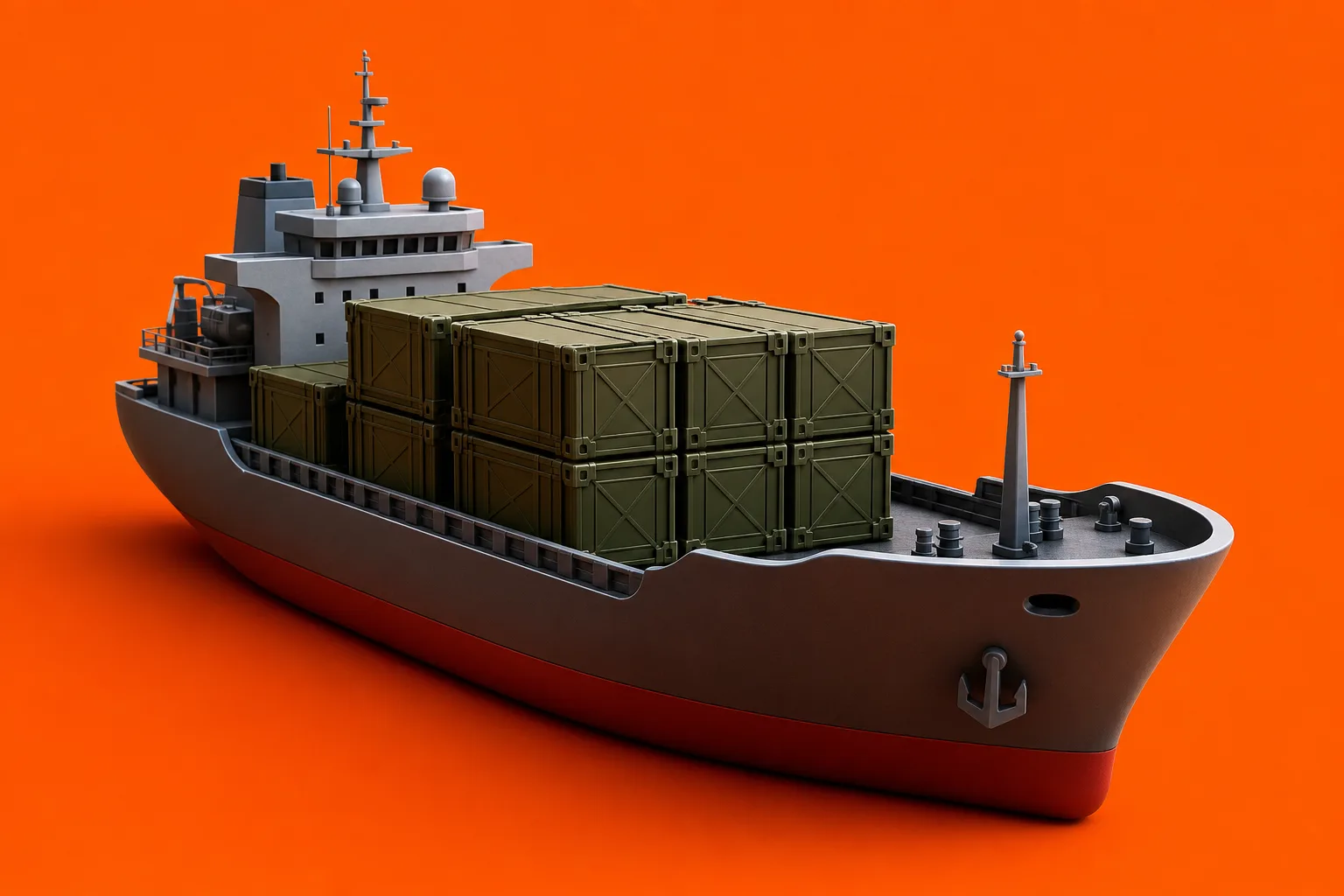
Ukraine says it has expanded its long-range drone campaign beyond the Black Sea and into the Caspian Sea, targeting a vessel allegedly involved in transporting military cargo from Iran. The claim, made by President Volodymyr Zelensky on July 25, 2026, marks a notable escalation in the geographic reach of the war.
The most important market takeaway is not a confirmed shift in battlefield control, but the visibility of Russia-Iran military supply links. If Ukrainian strikes are now reaching cargo routes tied to Iranian matériel, investors face a wider geopolitical risk map spanning defense supply chains, shipping lanes and regional energy infrastructure.
Ukraine has also claimed strikes against more than 180 vessels and maritime targets around Crimea over the prior three weeks, underscoring the growing scale of its maritime drone operations and the pressure being applied to Russian logistics.
Key Facts
- Volodymyr Zelensky said on July 25, 2026 that Ukrainian forces achieved “very good results” from long-range strikes in the waters of the Caspian Sea.
- Ukraine has claimed attacks on more than 180 vessels and maritime targets near Crimea over the previous three weeks.
- In August 2025, Ukraine said it struck the Russian cargo ship Port Olya-4 at a Caspian Sea port while it was carrying Shahed drone components and ammunition.
- The vessel cited in the latest statement was described as being involved in transporting military cargo from Iran.
- Online threats circulating on Iranian Telegram channels referenced possible ballistic missile retaliation against Ukraine, though no official action was confirmed.
Ukraine Caspian Sea Strike
The July 25 statement matters because it extends the perceived battlespace of the Russia-Ukraine war into a region normally viewed as a rear logistics corridor rather than an active strike zone. The Caspian Sea is strategically important for Russia’s internal transport routes and for military cargo flows that may connect Iranian production with Russian war needs.
If the claim is accurate, the strike reinforces a pattern that has become central to Ukraine’s strategy: using lower-cost, long-range drones to disrupt supply chains rather than relying solely on direct battlefield attrition. Maritime assets, energy sites, warehouses and logistics hubs have increasingly become the target set. That approach can raise the cost of sustaining Russia’s war effort without requiring conventional naval superiority.
The reference to Iran is equally significant. It points to the continuing role of Shahed drone technology, components and munitions in Russia’s military procurement network. For investors, the issue is less about one ship and more about whether sanctions pressure, military interdiction and retaliatory threats begin to affect broader trade patterns across the Black Sea-Caspian corridor.
Ukraine’s latest claim suggests the war is no longer only about front lines on land, but about how far each side can reach into the other’s military supply network.
Why the Iran Link Matters
Russia-Iran defense cooperation has been a recurring theme since Shahed drones emerged as a major feature of Russian strike tactics. A vessel tied to moving components or ammunition would represent a critical node in that supply relationship. Even limited disruption can force rerouting, increase transit times and raise security costs for associated cargo movement.
At the same time, investors should separate rhetoric from immediate operational change. Social media threats of ballistic missile retaliation add to headline risk, but they do not by themselves establish a new conflict front. The more durable signal is the apparent vulnerability of long-distance military logistics and the possibility that supporting infrastructure, ports and transport assets face higher future risk.
Implications for Investors
For markets, the first implication is geopolitical spillover risk. Any perceived convergence between the Russia-Ukraine conflict and Iran-linked military supply channels can influence energy pricing, maritime insurance costs and regional risk premiums. While the probability of a broader interstate escalation still appears limited, even a low-probability event can move oil, freight and defense-related equities when logistics corridors are involved.
The second implication is sector-specific. Defense companies tied to air defense, counter-drone systems, electronic warfare and secure logistics could remain in focus as warfare continues to evolve toward long-range unmanned disruption. Shipping operators, insurers and firms with exposure to Black Sea or Caspian transport routes may face closer scrutiny from investors evaluating route security and sanctions compliance.
Third, commodities and infrastructure investors should watch whether attacks on maritime supply networks begin to intersect with energy exports, port throughput or inland transport links. Ukraine’s earlier campaign targeted Russian energy assets, warehouses and logistics hubs, and any overlap between military and commercial networks could amplify volatility in regional trade expectations.
The next key watch-point is whether additional evidence emerges around the vessel struck, the cargo involved and any concrete Iranian or Russian response. If follow-on strikes or retaliation materialize, investors may need to reassess the risk profile of a conflict that is increasingly defined by reach, logistics and cross-border military partnerships.