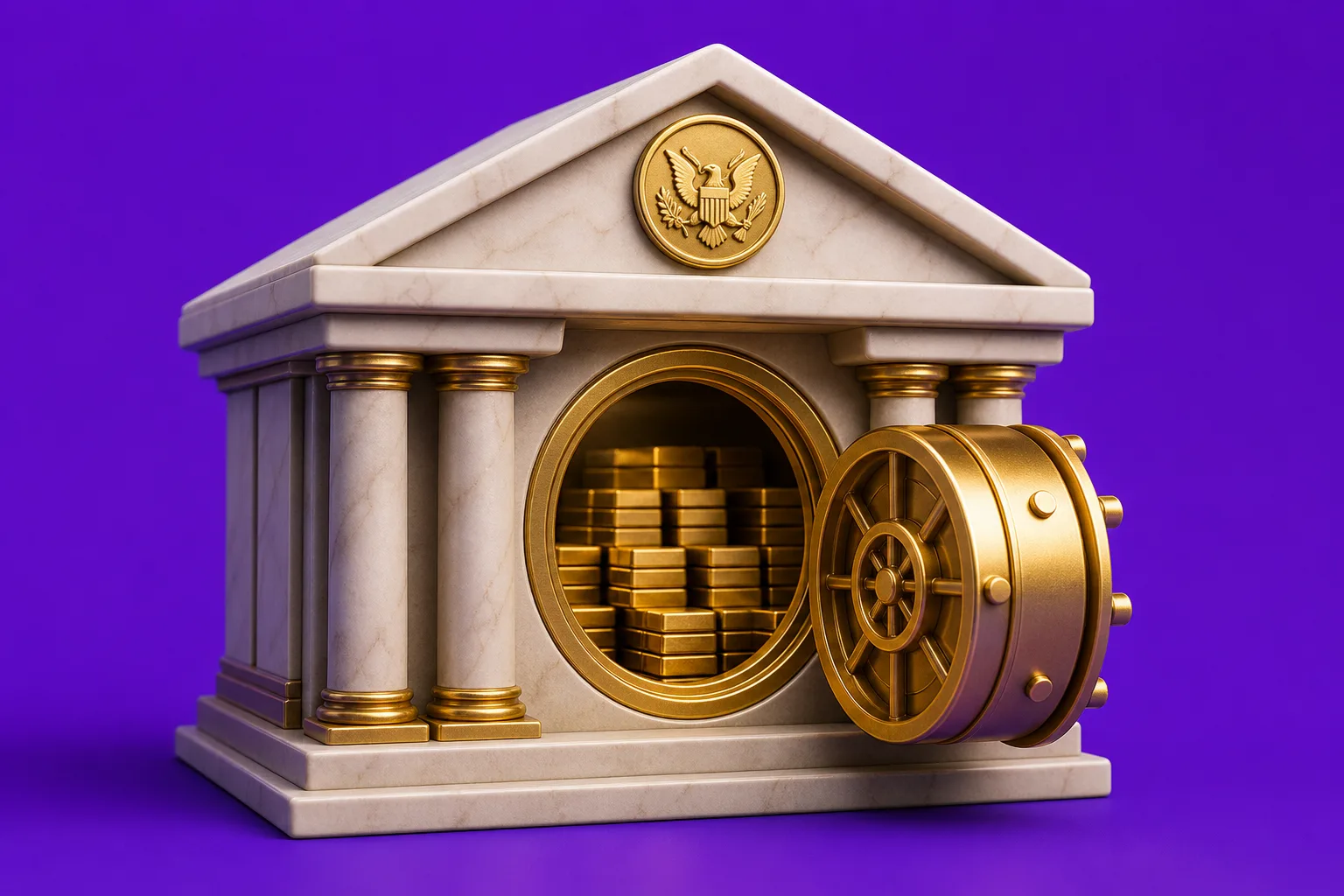
The US Treasury may have a far larger pool of funding for its bond buyback plans than markets first assumed. With the Treasury General Account, or TGA, holding nearly $1 trillion, officials appear to have the option to use existing cash rather than rely solely on fresh bill issuance.
That matters because the debate around long-term Treasury yields has intensified as borrowing costs remain elevated across the curve. If the Treasury deploys part of the TGA for long-dated bond purchases, it could expand the practical scale of its operations and strengthen its ability to affect market pricing.
The prospect has also sharpened investor focus on whether buybacks are evolving from a liquidity-management tool into a more consequential market signal for rates, the US dollar, gold, and bitcoin.
Key Facts
- The Treasury General Account currently holds nearly $1 trillion in cash at the Federal Reserve.
- The Treasury recently announced purchases of longer-dated Treasury bonds as part of its buyback operations.
- Markets had initially expected the program to be financed mainly through increased issuance of short-term Treasury bills.
- Using the TGA would allow the Treasury to fund buybacks with existing cash balances rather than immediate new debt issuance.
- Officials have not specified how much of the TGA could be used or when a final decision may be announced.
US Treasury TGA and Bond Buybacks
The central issue is not simply whether the Treasury will conduct buybacks, but how those purchases are financed. A program funded by additional short-term bills resembles a maturity-management exercise, often compared with a twist operation in which the government alters the mix of debt outstanding. A program funded from the TGA, by contrast, uses already-collected cash and could be perceived as more forceful because it does not require an offsetting increase in near-term issuance at the outset.
For the bond market, this distinction is significant. Long-dated Treasury yields reflect expectations for inflation, growth, fiscal supply, and term premium. If investors believe the Treasury is prepared to direct a portion of its nearly $1 trillion cash balance toward buying back longer maturities, that could improve liquidity in off-the-run bonds and potentially lean against rising long-end yields. Even if the actual sums used are modest, the signaling effect alone may influence market expectations.
The move would matter most to rate-sensitive sectors and asset classes. Banks, insurers, bond funds, mortgage markets, and equity sectors dependent on lower discount rates all watch the long end of the Treasury curve closely. A credible mechanism for moderating long-term yields could ease financial conditions at the margin, though the overall impact would depend on scale, timing, and whether broader inflation and deficit concerns continue to pressure yields higher.
A nearly $1 trillion TGA gives the Treasury an option markets may have underappreciated: buy back longer-dated bonds with existing cash and potentially add more weight to its effort to shape the yield curve.
Why the Funding Method Matters
The Treasury General Account is effectively the federal government’s checking account at the Federal Reserve. Cash in the TGA comes from tax receipts and other inflows and is used to meet government obligations. When balances are high, the Treasury has some flexibility to draw them down before returning to heavier borrowing in the market. That makes the TGA a potentially powerful buffer during periods when officials want more discretion over funding choices.
Using the TGA for buybacks would not eliminate the government’s broader financing needs, but it could alter their timing. In practical terms, that may reduce immediate pressure to sell more bills while the Treasury is attempting to retire or repurchase longer-dated securities. For investors, this sequencing can matter because shifts in supply at different maturities often influence money-market conditions, curve shape, and risk appetite across fixed income.
Implications for Investors
For bond investors, the first watch-point is whether TGA-funded buybacks become large enough to affect liquidity and term premium in a sustained way. If the Treasury commits meaningful cash to long-dated purchases, long-end yields could face downward pressure, particularly in maturities where market functioning is less efficient. That would be supportive for duration-heavy portfolios, investment-grade credit, and rate-sensitive equities. However, a small or symbolic program may disappoint investors who are expecting a material shift in borrowing costs.
Currency and macro investors will also be watching the broader interpretation of this policy option. If markets view TGA drawdowns and buybacks as part of a softer approach to funding conditions, that could weigh on the US dollar at the margin while supporting assets often favored when investors anticipate easier financial conditions or fiscal dilution concerns. Gold and bitcoin could remain sensitive to that narrative, especially if long-term yields fail to rise despite heavy structural borrowing needs.
There are also risks. A lower TGA balance can eventually mean more issuance later, depending on tax receipts, spending flows, and debt management plans. Investors should avoid assuming that near-term support for the long end automatically translates into lower yields over the medium term. Fiscal deficits, inflation expectations, Federal Reserve policy, and demand from foreign and domestic buyers will still dominate the bigger picture.
The next phase will depend on whether officials formalize the use of the TGA and disclose the size of any planned drawdown. Until then, the Treasury market is likely to treat the nearly $1 trillion cash balance as both a policy tool and a source of uncertainty for the direction of long-term yields.