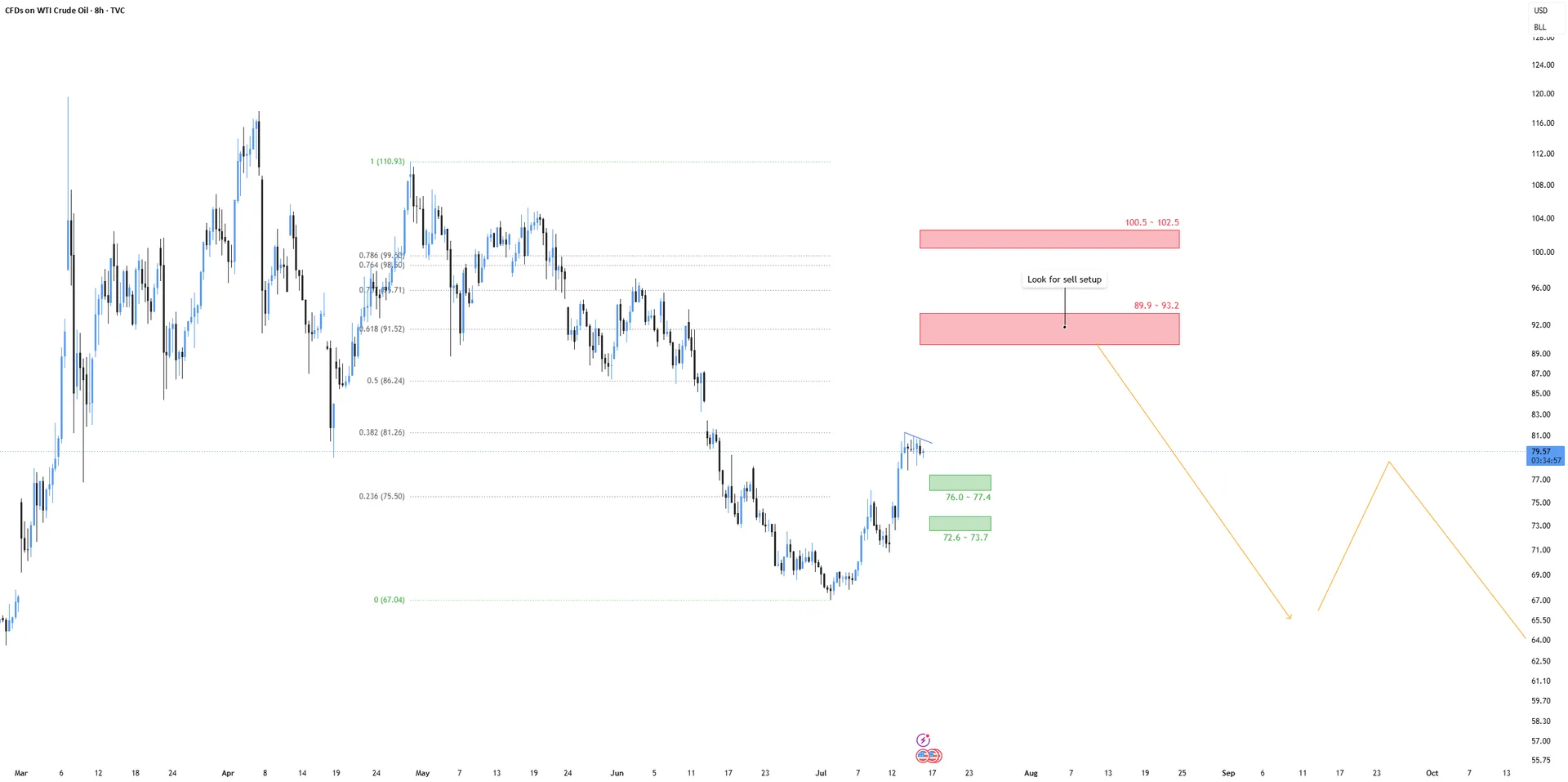
USOIL is trading with a bullish near-term bias as a reversal structure continues to attract buyers. The most important feature on the chart is the developing rebound, which remains intact while price holds above its recent support zone.
At the same time, the advance is moving toward a higher-timeframe supply area that could become a decisive test for trend continuation. That combination keeps the setup constructive in the short run, but sensitive to any loss of momentum near resistance.
Market Snapshot
USOIL is the focus, with the current analysis centered on a short-term technical structure within a broader rebound phase. The market appears to be transitioning from a prior pullback into a recovery move, forming the kind of reversal pattern that often signals improving demand.
In plain English, buyers currently have the edge, but they are approaching an area where sellers may respond more aggressively. The prevailing bias is bullish as long as price continues to respect nearby support and sustain the sequence of higher lows that defines the current recovery.
Key Levels
- Support: Recent swing-low zone underpinning the current rebound and preserving the short-term higher-low structure.
- Resistance: Higher-timeframe supply area overhead, where the latest bullish expansion may begin to face stronger selling pressure.
These levels matter because they frame the current reversal narrative. Support represents the area where buyers have recently defended price, while resistance reflects a broader zone of prior supply and potential profit-taking. The more often price reacts around these areas, the more relevant they become for confirming continuation or signaling exhaustion.
Bullish Scenario
The bullish path remains valid if USOIL continues to hold above support and builds on the current reversal structure with fresh higher highs. A decisive push through the nearby resistance band would act as the main trigger, suggesting that buyers are strong enough to absorb supply and extend the recovery leg.
In that case, the next realistic target zone would be the upper portion of the broader supply region, where price could test the limits of the current move. Follow-through would likely depend on whether momentum expands alongside the breakout, rather than fading immediately after the initial push higher.
Bearish Scenario
The bearish alternative begins to gain traction if USOIL fails to break overhead supply and starts losing the higher-low structure that supports the current rebound. A rejection near resistance, especially if followed by a move back below recent support, would weaken the bullish thesis and point to a reversal from higher-timeframe supply.
That breakdown would act as the practical invalidation level for the near-term bullish view. If sellers regain control, the next target zone would likely be the prior reaction area beneath current support, where the market may look for renewed demand or confirm a deeper retracement.
What to Watch
Macro catalysts remain important for USOIL, especially developments that influence global growth expectations, inflation trends, and the outlook for energy demand. Traders will also be watching any headlines that affect geopolitical risk perception, since that premium has been a visible part of the current bullish backdrop.
Session timing can also shape price behavior. Oil often sees stronger directional moves during periods of heavier liquidity, particularly when U.S. market participants are active and when scheduled energy-related data releases are in focus. A breakout attempt during a thin session may carry less confirmation than one backed by broad participation.
Correlated assets and sentiment indicators can add context as well. Strength in energy equities, firmness in broader commodity benchmarks, or a stable risk environment can reinforce the bullish case. On the other hand, a sharp deterioration in sentiment or signs of easing geopolitical tension could reduce the risk premium currently helping to support prices.
USOIL remains constructive while the reversal structure stays intact, but the market is approaching an area that could define the next phase. Whether price breaks through supply or stalls beneath it should offer a clearer signal on the balance between continuation and reversal.