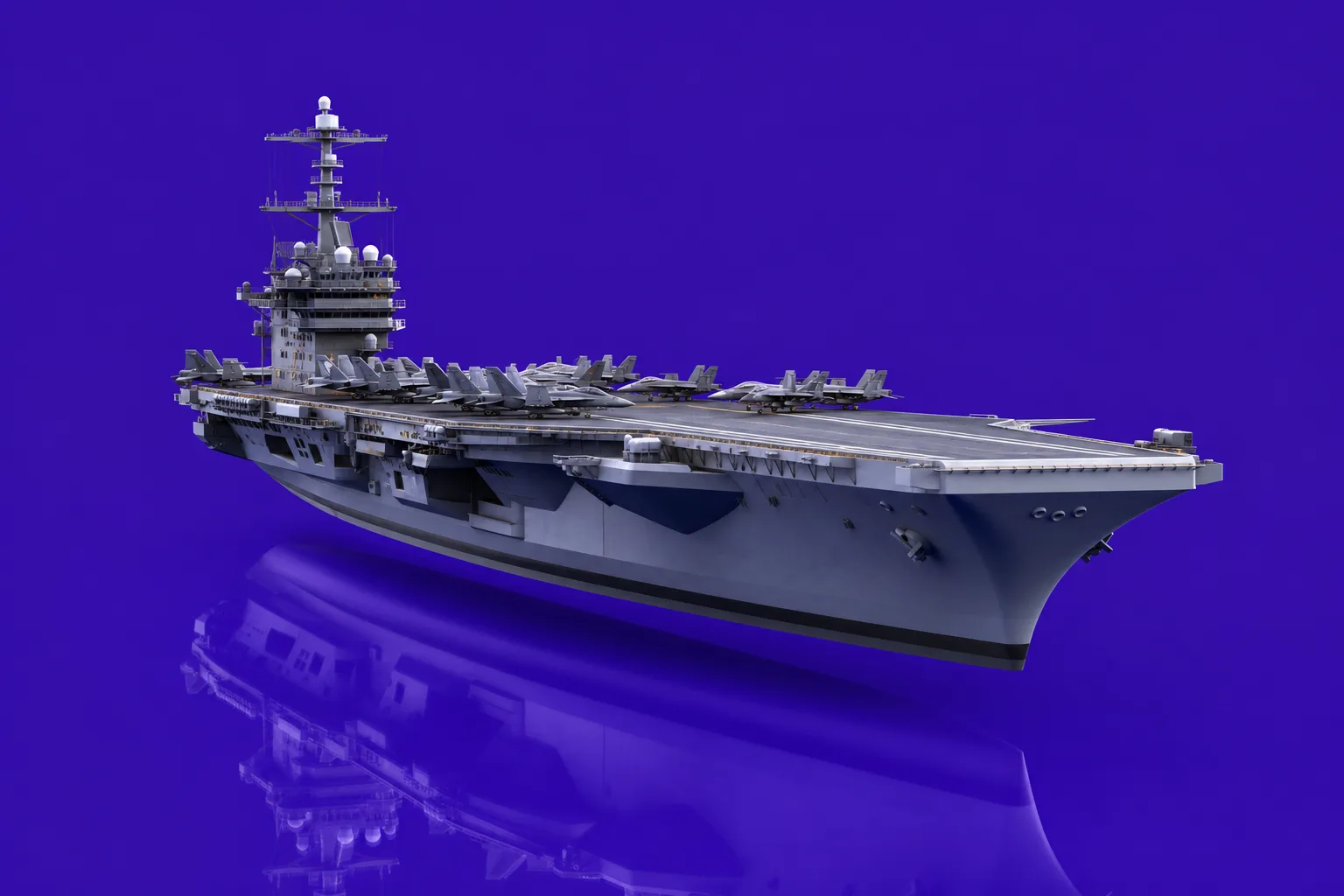
The USS Abraham Lincoln has begun its return to the United States after a 286-day deployment, a timeline that directly challenges repeated online claims that the aircraft carrier had been sunk or incapacitated by Iranian attacks. The vessel’s port visit in Thailand and subsequent departure showed the carrier operating normally after months at sea.
For markets, the significance goes beyond one warship. The Abraham Lincoln episode underscores how fast-moving military misinformation can influence sentiment around oil, shipping, defense stocks, and geopolitical risk before verifiable facts catch up.
The carrier’s visible rust and wear, circulated online as supposed proof of battle damage, aligned with normal maintenance issues seen on naval vessels after extended deployments. Once cleaned and prepared for onward travel, the ship departed Laem Chabang Port en route back to Naval Air Station North Island in Coronado, San Diego.
Key Facts
- USS Abraham Lincoln completed a 286-day deployment before stopping at Laem Chabang Port in Thailand.
- Iran-linked social media accounts claimed on at least three occasions that the carrier had been sunk or struck by drones and missiles.
- The ship spent five days in port for rest, cleaning, and maintenance before departing Thailand.
- USS Abraham Lincoln is a Nimitz-class nuclear-powered aircraft carrier designated CVN-72.
- The vessel is returning to the United States, with Naval Air Station North Island in Coronado identified as its destination.
USS Abraham Lincoln
The central fact is straightforward: USS Abraham Lincoln remained afloat, operational, and accounted for after a lengthy deployment despite repeated claims to the contrary. Images and videos shared online portrayed the carrier as destroyed or heavily damaged, but subsequent visuals from Thailand showed a ship undergoing routine cleaning and upkeep rather than emergency repair.
The gap between online narratives and observable military movements matters because aircraft carriers are among the most symbolically important assets in U.S. power projection. Claims that a carrier has been sunk can trigger abrupt swings in perceived regional risk, especially in the Persian Gulf and wider Middle East, where any escalation can affect tanker traffic, crude prices, insurance costs, and investor appetite for risk.
The people most affected by this information environment extend well beyond military watchers. Energy traders, defense investors, shipping companies, and insurers all track conflict indicators closely. When false reports spread widely, they can distort expectations around freedom of navigation, force posture, and the probability of retaliation, even if those narratives later unravel.
The return of USS Abraham Lincoln is a reminder that viral battlefield claims can move sentiment long before they are proven false.
How disinformation can move markets
Military misinformation has become a tradable variable. In periods of conflict, unverified claims can influence oil futures, defense contractors, freight rates, and safe-haven assets because algorithms and human traders often react to headlines before full confirmation emerges. A report of a major U.S. naval loss, if believed even briefly, could imply a wider conflict, disrupted shipping, or a more aggressive military response.
That dynamic is particularly relevant around the Strait of Hormuz, one of the world’s most important maritime chokepoints. Even when physical flows remain stable, digital narratives about attacks, blockades, or naval losses can feed volatility in energy-linked assets. Investors increasingly need to separate operational reality from influence campaigns designed to shape perception.
Implications for Investors
For investors, the most immediate takeaway is that geopolitical headlines require a verification discount. Markets often price worst-case scenarios quickly, especially when the alleged event involves strategic assets such as an aircraft carrier. In this case, the verified sequence of events points to continuity rather than disruption: a long deployment, a maintenance stop, and a return voyage home.
That suggests caution when trading first-wave reports tied to conflict zones. Energy names, shipping firms, marine insurers, and defense contractors can all react sharply to military rumors, but not every viral claim reflects a material shift in operating conditions. Investors may want to watch for confirmation through observable logistics, official fleet movements, and sustained changes in commodity flows rather than social-media volume alone.
There is also a broader sector lesson. Companies exposed to information integrity, cyber defense, satellite intelligence, and open-source verification may see growing relevance as governments and markets adapt to digital-era conflict. The more disinformation becomes part of geopolitical competition, the more valuable trusted verification tools could become across both public and private markets.
Looking ahead, investors should keep monitoring naval activity, shipping patterns, and energy market pricing for signs of genuine escalation rather than narrative-driven noise. The Abraham Lincoln case shows that in a high-volatility information environment, confirmed facts can arrive later than the trade.