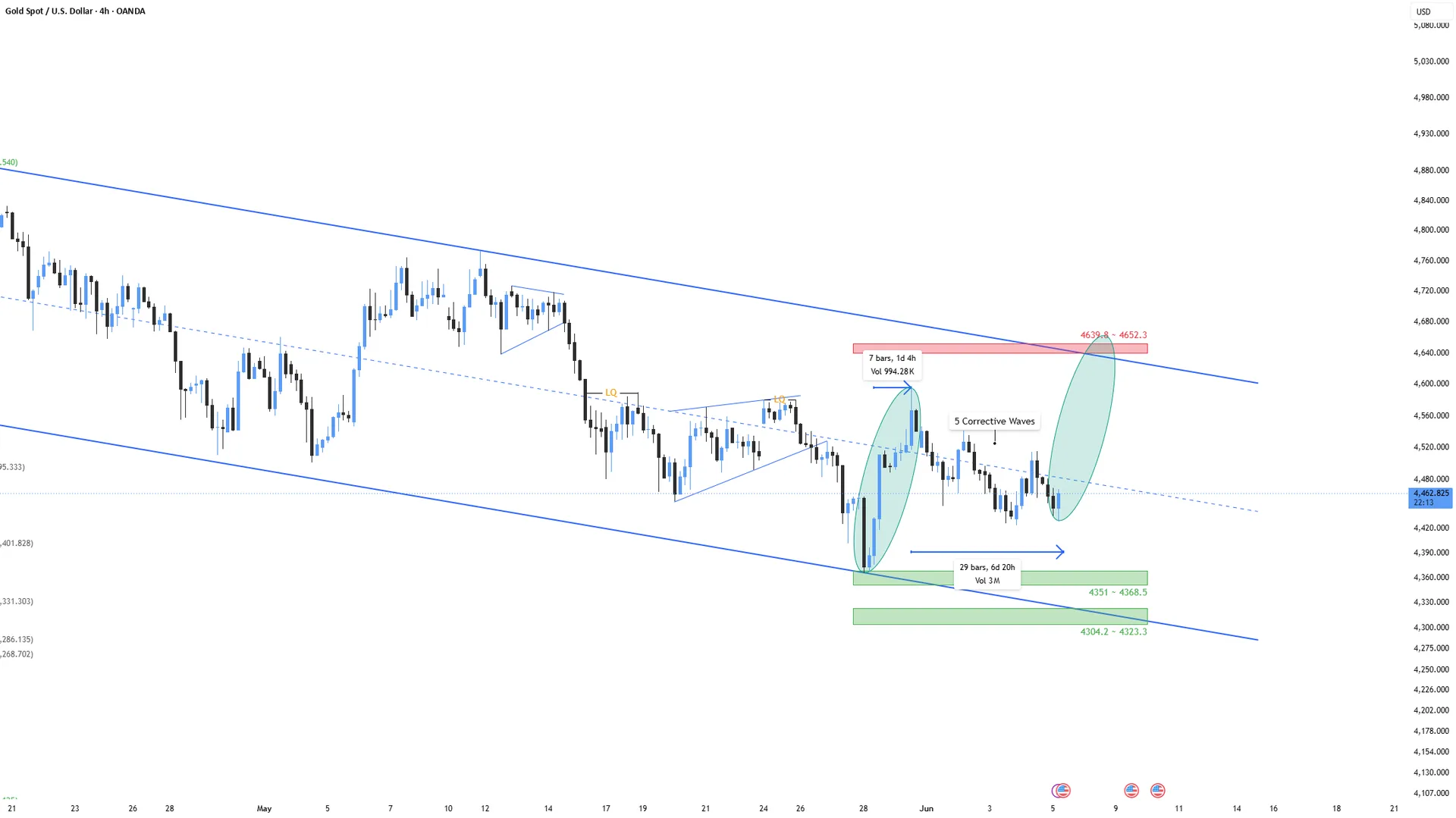
XAUUSD is holding a neutral bias as gold continues to trade within what appears to be a corrective 5-wave structure. The key issue for market participants is whether that pattern is close to completion, setting up the next directional move.
For now, the structure matters more than any single headline. If the correction is ending, gold could regain upside momentum quickly; if not, pressure from a firmer US dollar and higher Treasury yields may keep XAUUSD capped.
Market Snapshot
XAUUSD, the spot gold market against the US dollar, is being assessed through the lens of a corrective formation rather than a clear trending phase. The broader setup suggests that price action has been consolidating in a multi-leg pullback, with traders watching for signs that the final wave of that correction may be in place.
In plain English, gold is at a crossroads. The prevailing bias is neutral because the market has not yet confirmed whether the recent weakness is simply a pause before another bullish impulse or the start of a deeper extension lower. Until price breaks out of the current corrective structure, conviction in either direction remains limited.
Key Levels
- Support: Recent correction lows and the lower boundary of the current 5-wave structure.
- Resistance: The last swing high inside the corrective range and the upper boundary that would signal a bullish break of structure.
These levels matter because corrective patterns often resolve sharply once price clears a boundary that has contained multiple reactions. Traders will be watching for confluence with previous turning points, momentum shifts, and any pickup in volume around those zones.
Bullish Scenario
The constructive case for gold depends on confirmation that the 5-wave corrective sequence has run its course. In that scenario, XAUUSD would need to reclaim resistance at the top of the recent range and hold above it, signaling that buyers are regaining control and that the market is transitioning from correction back into impulse.
If that trigger develops, a realistic upside path would be a move back toward the prior reaction highs, followed by a retest of the next overhead supply zone. The strength of that rebound would likely depend on whether macro news softens the US dollar or eases pressure from real yields, both of which tend to support gold when they move in its favor.
Bearish Scenario
The bearish path remains valid if the current pattern is not complete and price fails to reclaim the upper boundary of the correction. In that case, continued dollar strength or another rise in US yields could keep gold under pressure, allowing the market to extend the corrective move rather than reverse it.
For this outlook, the key invalidation level would be a sustained break above resistance and a clear shift in market structure. Until that happens, the downside target zone would remain the recent swing lows, with room for an extension into lower support if macro conditions turn more hostile for non-yielding assets such as gold.
What to Watch
The most important catalysts are labor-market releases, inflation data, and central-bank expectations, particularly from the United States. Stronger-than-expected economic figures can reinforce a higher-for-longer rate narrative, which often lifts yields and the US dollar while reducing the appeal of gold. Softer data can have the opposite effect.
Session timing also matters. XAUUSD often sees stronger directional moves during the London and New York trading windows, especially when major US data is released. If a breakout from the current corrective range occurs during one of those periods, it may carry more weight than a thin, low-liquidity move outside active market hours.
Correlated assets should remain on the radar as well. US Treasury yields, the dollar index, and broader risk sentiment can all shape the next move in gold. If yields retreat and the dollar weakens, that would improve the case for a bullish resolution. If both continue to rise, gold may struggle to escape the corrective pattern.
XAUUSD is approaching an important technical decision area, but the market has yet to confirm its next trend. Price behavior around the correction boundaries and incoming macro data should determine whether gold shifts back into an advance or extends its current pullback.