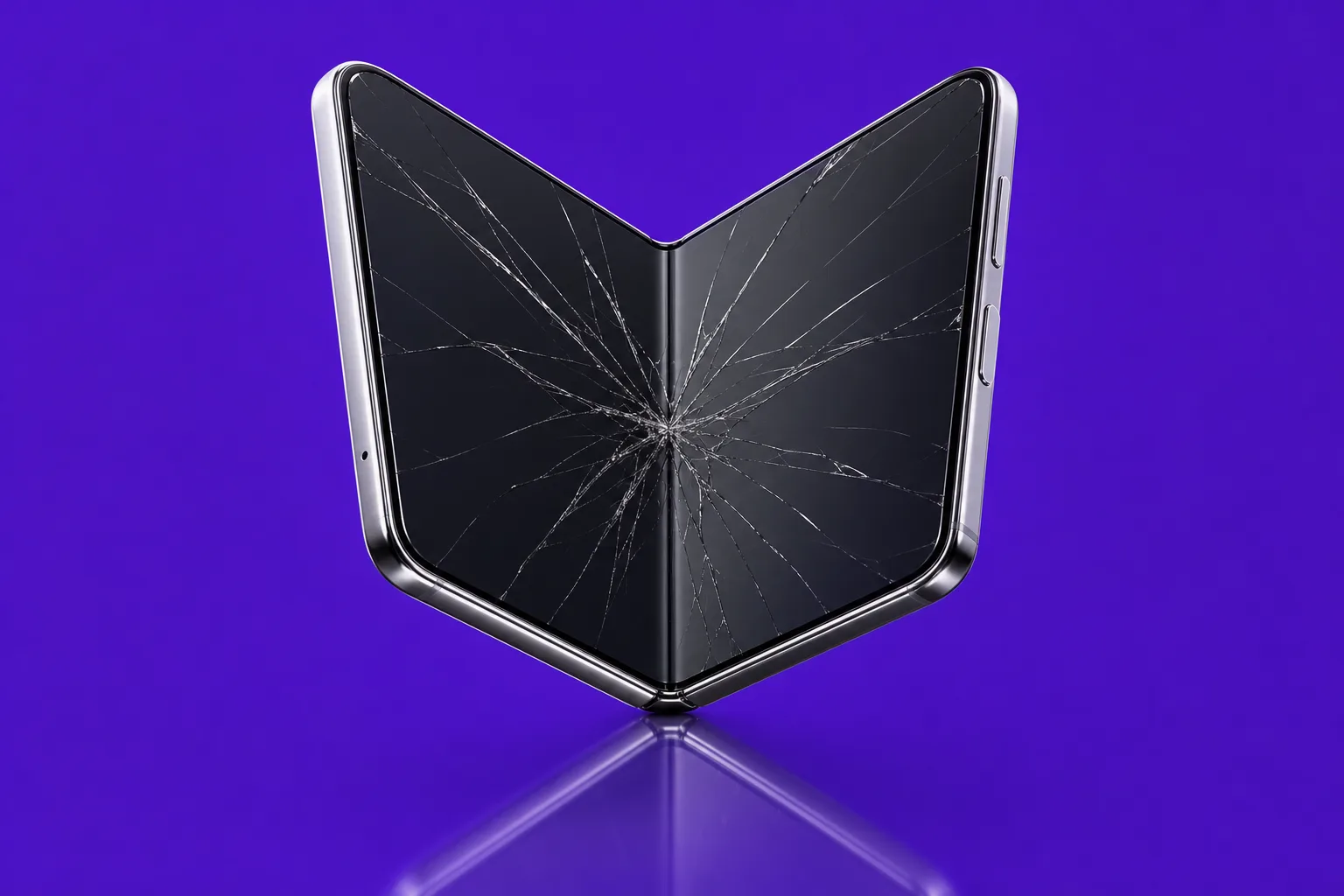
Apple’s iPhone Duo launch has quickly shifted from supply-driven excitement to questions about product durability. Just days after the foldable phone reached buyers on October 23, 2026, early users began posting complaints that the inner display cracked along the center crease after repeated opening and closing.
The issue matters because the iPhone Duo is a premium device priced around $2,000 and positioned as a major hardware category expansion. With estimated lead times stretching to about 79 days and broad store sellouts, any defect narrative could affect consumer confidence at a critical point in the rollout.
Reports describe a crunching sound when the handset is unfolded, followed by a visible crack or display failure on the larger inner screen. While the full scope of affected units remains unclear, the speed at which complaints surfaced has intensified scrutiny of the hinge and foldable display design.
Key Facts
- Bank of America analysts estimated iPhone Duo lead times at about 79 days as of October 26, 2026.
- The foldable device reached consumers on October 23, 2026, and complaints emerged over the same weekend.
- Some users said the inner screen cracked after fewer than 20 openings, while one teardown-related post cited failure after 75,000 folds.
- The iPhone Duo carries a price tag of roughly $2,000, placing it at the top end of the premium smartphone market.
- International availability was expected to begin in mid-to-late January, adding weight to any early manufacturing or design concerns.
Apple iPhone Duo screen cracks
The early complaints center on the iPhone Duo’s inner foldable display, specifically the area around the hinge and center crease. Users have described hearing a crunch-like sound when opening the device, after which a crack forms or the panel develops discoloration, including white patches and partial screen failure. In several accounts, the smaller external display continued working even after the main screen became unusable.
That distinction is important because it points investors and industry watchers toward a mechanical or materials issue in the foldable assembly rather than a full-device electronics failure. Foldable phones combine thin glass, polymer layers, adhesives, hinge tolerances, and pressure distribution in a way that creates more potential points of failure than traditional slab smartphones. Even a small design flaw can become highly visible when products reach real-world users.
Apple’s entry into foldables has been closely watched because the company has historically waited to enter new hardware categories until components, supply chains, and use cases were more mature. If the iPhone Duo’s early complaints remain isolated, the impact could be limited to warranty handling and negative headlines. If the problem proves structural and repeatable across more units, Apple could face higher return rates, repair costs, slower demand conversion, and possible delays to broader international expansion.
For a foldable phone priced near $2,000, durability is not a secondary feature; it is the product thesis.
Why the hinge matters
Foldable devices live or die by hinge engineering. A screen that bends repeatedly must withstand torsion, dust exposure, pressure changes, and uneven stress over thousands of cycles. Reports suggesting a crunching sound before failure raise the possibility that debris intrusion, hinge misalignment, or pressure concentration may be involved.
The commercial risk is amplified because Apple’s brand premium depends on perceived reliability as much as innovation. Executives had previously signaled confidence in the product category, making any durability controversy more sensitive than a typical launch-day software bug or cosmetic defect.
Implications for Investors
For investors, the first question is whether the issue is anecdotal or systemic. A handful of viral complaints can pressure sentiment without materially affecting revenue. But if warranty claims climb or production changes are required, the iPhone Duo could shift from a high-margin growth catalyst to a near-term margin headwind. Monitoring return rates, service guidance, and any adjustment to shipment timing will be critical.
The second issue is mix and demand quality. Long lead times and resale premiums suggest strong early interest, but those signals can be distorted in the first days of a high-profile launch. If buyers begin delaying purchases until durability questions are resolved, Apple may still retain headline demand while losing conversion efficiency. That matters for suppliers tied to foldable displays, hinges, specialty glass, and final assembly, where production planning depends on confidence in sustained throughput.
There is also a strategic angle. Foldables represent one of the few smartphone form-factor changes that can support higher average selling prices in a mature market. A successful iPhone Duo could widen Apple’s premium positioning; a troubled launch could reinforce consumer skepticism toward foldables more broadly. Investors should watch whether management frames the issue as isolated damage, a repair-program matter, or a design refinement challenge for future production batches.
The next signal will likely come from Apple’s customer support posture, replacement activity, and any shift in delivery schedules before the expected mid-to-late January international rollout. Until then, the iPhone Duo remains both a promising category expansion and an early test of how much execution risk the foldable market still carries.