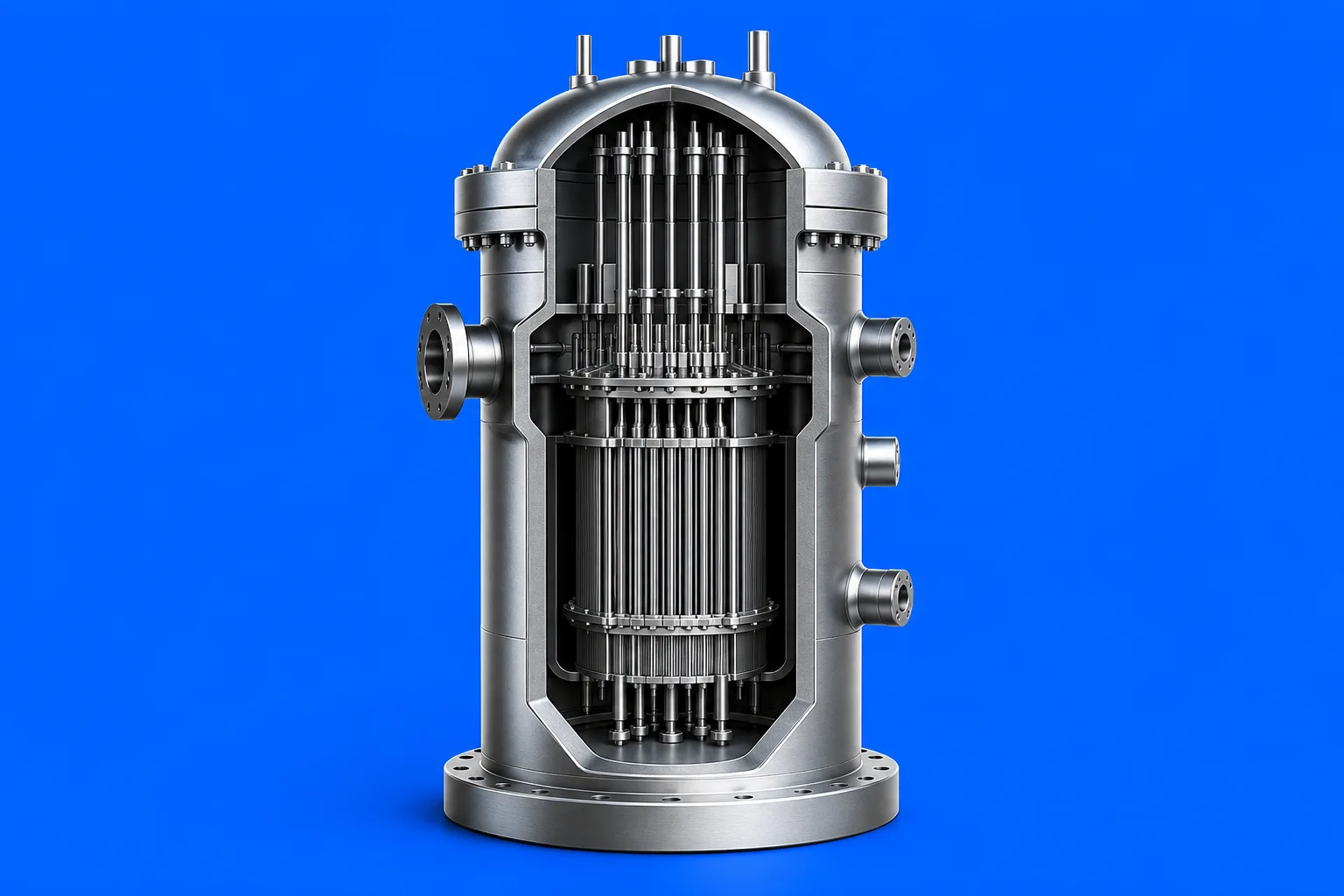
Constellation Energy has placed a strategic bet on a new model for building nuclear power, investing in Blue Energy as the developer advances a gas-to-nuclear project in Texas. The plan starts with roughly 1 gigawatt of gas-fired capacity around 2030 and is designed to transition later to as much as 1.5 gigawatts of nuclear generation using small modular reactors.
The move matters because Constellation is not a passive financial backer. It operates the largest nuclear reactor fleet in the United States, and its support adds industry credibility to Blue Energy’s effort to shorten construction timelines through shipyard prefabrication and a phased development model.
For investors, the transaction highlights a broader market shift: utilities and developers are searching for practical ways to add firm power faster as data center demand accelerates and long-dated nuclear projects remain difficult to finance.
Key Facts
- Constellation Energy operates 21 reactors in the United States and reports fleet capacity factors above 90%.
- Blue Energy’s planned Texas development would begin with two GE Vernova gas turbines delivering about 1 GW around 2030.
- The same site is intended to transition later to GE Vernova Hitachi BWRX-300 reactors targeting up to 1.5 GW of nuclear capacity.
- Early site work could begin in 2026, with a final investment decision targeted for 2027.
- The Constellation Technology Ventures investment is the unit’s first disclosed backing of a U.S. nuclear developer focused on SMRs.
Gas-to-Nuclear SMR Plan
At the center of the deal is a phased gas-to-nuclear strategy that tries to solve one of the power sector’s toughest problems: how to bring large amounts of reliable electricity online quickly without waiting a decade or more for a conventional nuclear plant. Under Blue Energy’s approach, gas turbines would provide the initial electricity output, while the project infrastructure is designed so the steam supply can later shift to nuclear reactors.
That structure is significant for power buyers that need capacity on a fixed timetable, especially hyperscale data center operators, manufacturers, and large commercial customers. Constellation has already shown it can secure large offtake agreements tied to nuclear generation, including deals involving the restart or extended operation of existing plants. By backing a developer pursuing new-build capacity, the company is signaling that future demand may justify more ambitious deployment pathways.
The Texas project also reflects how the industry is adapting to investor concerns over cost overruns and schedule delays. Rather than relying solely on traditional on-site nuclear construction, Blue Energy is promoting large-module fabrication in established shipyards, using industrial methods more commonly associated with offshore energy and liquefied natural gas infrastructure. The pitch is straightforward: standardize what can be built off-site, separate nuclear and non-nuclear scopes more clearly, and improve the odds of financing.
Constellation’s investment is less about the check size than the message: large-scale buyers need firm power faster, and developers that can make new nuclear more predictable will command attention.
Why the prefabrication model matters
New nuclear projects in the United States have long struggled with the same obstacles: site-specific complexity, labor constraints, regulatory uncertainty, and rising capital costs as schedules stretch. Blue Energy’s model aims to reduce those risks by fabricating major modules in existing shipyards with robotic and repeatable processes, then transporting them to the project site by barge.
The financing angle may be just as important as the engineering. Blue Energy’s design framework separates the nuclear island supplied by the reactor vendor from balance-of-plant work handled under fixed-price commercial contracts. If that structure holds, a larger portion of project capital could become easier to underwrite than in a traditional nuclear build, where lenders have often been wary of open-ended construction exposure.
Implications for Investors
For investors following power markets, Constellation’s move reinforces the growing premium on dispatchable, carbon-aware generation. Wind, solar, and battery projects continue to expand, but large industrial loads and AI-linked data center demand are increasing the value of around-the-clock electricity. That is creating room for technologies and structures that can deliver firm capacity on a credible timeline, even if the eventual nuclear component remains years away.
The clearest near-term readthrough may be for companies exposed to gas turbines, nuclear supply chains, and grid infrastructure. A phased project beginning with gas generation offers a more immediate equipment demand profile, while the later transition to SMRs supports the long-term case for reactor vendors, component manufacturers, engineering firms, and specialized construction partners. It also suggests that hybrid development pathways could become more common as utilities balance speed, emissions goals, and financing limits.
Risks remain substantial. The project still faces execution challenges, including permitting, final investment approval in 2027, equipment procurement, interconnection, and the practical handoff from gas to nuclear steam supply. Investors should also watch whether the model can secure customer commitments at prices strong enough to support both phases. If commercial traction builds, however, the strategy could offer a template for accelerating firm power additions in constrained markets.
The next milestones are likely to determine whether this becomes a one-off strategic investment or an early marker of a broader capital cycle in advanced nuclear. Early site work, offtake momentum, and progress toward the 2027 investment decision will be the key signals to watch.