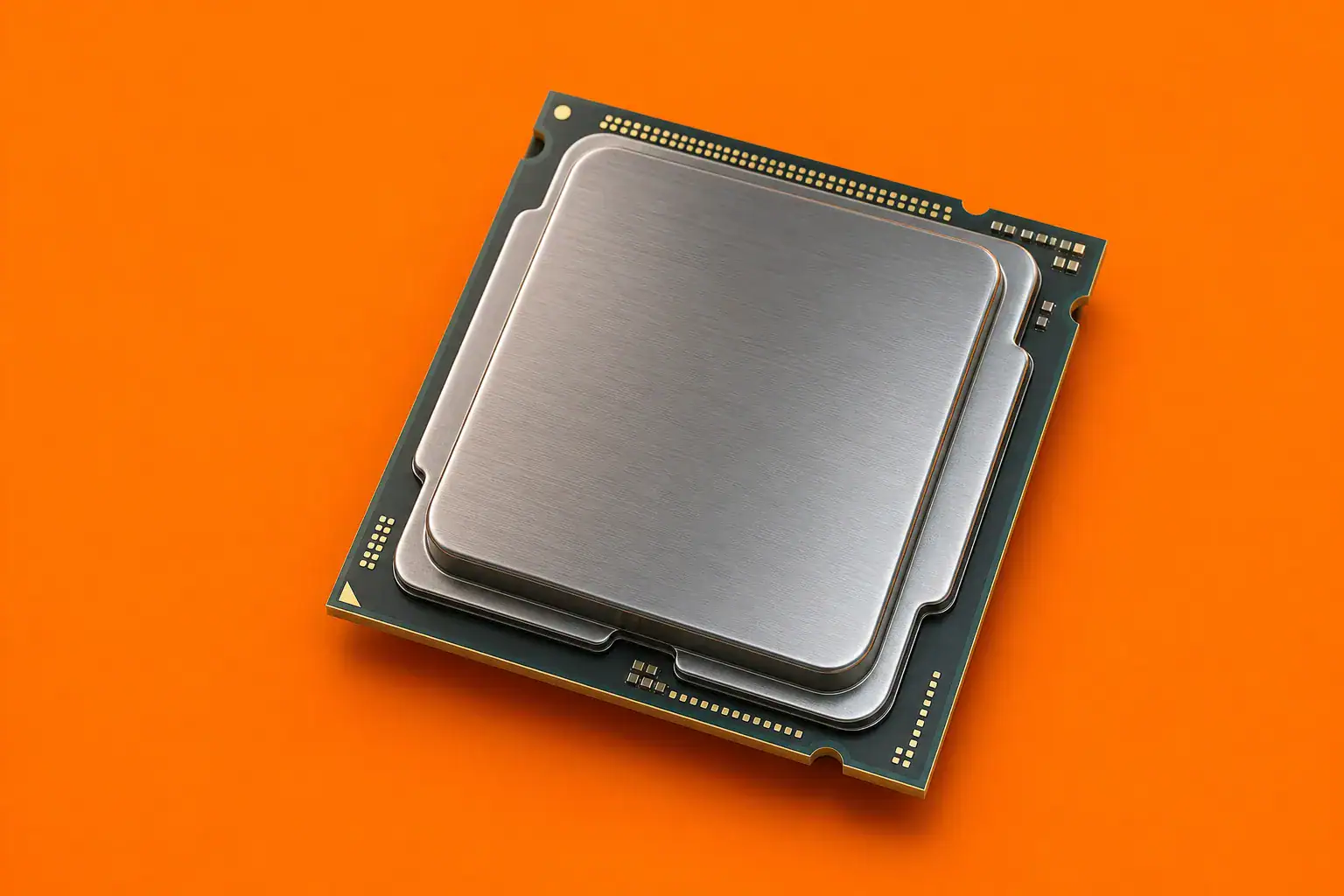
Intel stock dropped 8.05% to $119.02 on May 13, reversing part of one of the market’s most dramatic semiconductor rallies. The move erased $10.42 per share from the prior close of $129.44 and cut the company’s market value to about $619.81 billion.
The selloff followed a hotter-than-expected U.S. inflation print, with headline CPI at 3.8%, which pushed investors out of high-multiple chip names. Intel had briefly touched an intraday high of $133.48 before retreating, underscoring how quickly sentiment can shift after a parabolic advance.
For investors, the key issue is whether Intel stock is digesting an overheated run or beginning a deeper reset. The answer depends on how the market weighs near-term valuation pressure against Intel’s long-term foundry ambitions, AI exposure and government-backed strategic position.
Key Facts
- Intel shares fell 8.05% to $119.02 on May 13 after closing at $129.44 in the previous session.
- The stock has still gained about 491% over the past 12 months, with a 52-week range of $18.97 to $132.75.
- First-quarter 2026 revenue rose 7.18% year over year to $13.58 billion, while data center and AI revenue climbed 22% to $5.1 billion.
- Free cash flow remained negative at minus $6.55 billion despite cash and short-term investments increasing 55.78% to $32.79 billion.
- Consensus analyst targets cited in the market sit well below recent trading levels, including $96 from one bearish framework and an average near $81.41.
Intel Stock
The immediate trigger for the decline was macroeconomic, not company-specific. A stronger inflation reading raised the prospect of tighter financial conditions for longer, compressing valuations across growth-oriented semiconductor names. That pressure was visible throughout the sector, with leveraged chip vehicles and major peers posting steep losses as investors trimmed exposure to the highest-beta parts of the AI trade.
Intel was especially vulnerable because its rally had become exceptionally steep. The shares had risen nearly fivefold in a year, with much of that move packed into a short period. Such vertical advances can persist longer than expected, but they often leave little technical support beneath the market. Once selling begins, profit-taking can accelerate as momentum investors lock in gains and valuation-focused buyers step back.
Even after the drop, the longer-term bull case has not disappeared. Intel’s first-quarter 2026 results showed signs of operational improvement under CEO Lip-Bu Tan. Revenue reached $13.58 billion, operating expenses declined 8.39% to $4.41 billion, EBITDA increased 60.93% to $4.07 billion and earnings per share rose 123.08% to $0.29. Those figures suggest the turnaround has moved beyond narrative and into measurable progress, especially in data center and AI.
Intel’s latest selloff highlights the gap between improving fundamentals and a stock price that had already priced in years of execution success.
Why the foundry story matters
A major reason investors re-rated Intel so aggressively is the prospect of becoming a more meaningful contract manufacturer. Market attention has centered on a preliminary framework for Intel to produce some chips used in Apple devices. If that relationship expands over time, it could create a multibillion-dollar revenue stream and strengthen Intel’s position as a domestic alternative in advanced semiconductor manufacturing.
But the timeline is long. New wafer customers require additional capital expenditure, qualification work and production ramp-up. Meaningful revenue from large foundry wins may not arrive until 2028 or later, while early factory ramps typically pressure margins through depreciation, lower yields and startup costs. That makes the foundry opportunity strategically important but financially back-end loaded.
Intel’s strategic appeal is also tied to industrial policy and geopolitics. The company remains one of the most important U.S.-based semiconductor manufacturing assets, with CHIPS Act support helping anchor the domestic buildout. In a market increasingly focused on supply-chain resilience, that status gives Intel a degree of political and strategic relevance that few peers can match.
Implications for Investors
The first takeaway is that Intel now sits at the intersection of two competing market forces: long-duration strategic upside and short-duration valuation risk. Bulls can point to a potentially expanding foundry business, stronger AI-related demand, a repaired balance sheet and the strategic premium attached to domestic semiconductor capacity. Bears can point to a stock that climbed too far too fast, negative free cash flow and a profit timeline that remains several years away.
Cash flow is the critical metric to monitor. Intel’s balance sheet improved over the past four quarters, with total liabilities down 6.39% to $80.34 billion and total assets up 6.81% to $205.33 billion. Yet free cash flow of minus $6.55 billion remains a serious constraint. If that burn persists, the market may be less willing to grant premium valuation multiples no matter how compelling the long-term strategic story appears.
Competition is another watch-point. AMD continues to execute well in data center silicon, and its latest quarterly growth reinforces how intense the battle remains in AI and server markets. Intel does not need to dominate those segments to justify future upside, but it does need to show it can protect enough share and convert foundry spending into durable returns. Investors should also keep an eye on whether Q2 guidance and subsequent quarters confirm that Q1 was the start of a sustained earnings improvement rather than a single strong print.
For portfolio positioning, the recent decline may interest long-term investors who missed the earlier rally, but timing matters. Analyst target dispersion remains wide, and average estimates below the current share price suggest the market is still debating how much future success is already reflected in Intel stock. That makes pullbacks, cash flow trends and updates on major customer agreements more important than headline excitement alone.
Intel still offers one of the market’s clearest ways to invest in U.S. semiconductor manufacturing capacity and a possible foundry reshaping by 2030. The next phase for the stock will depend less on momentum and more on whether execution, margins and cash generation begin to catch up with the ambition embedded in its valuation.