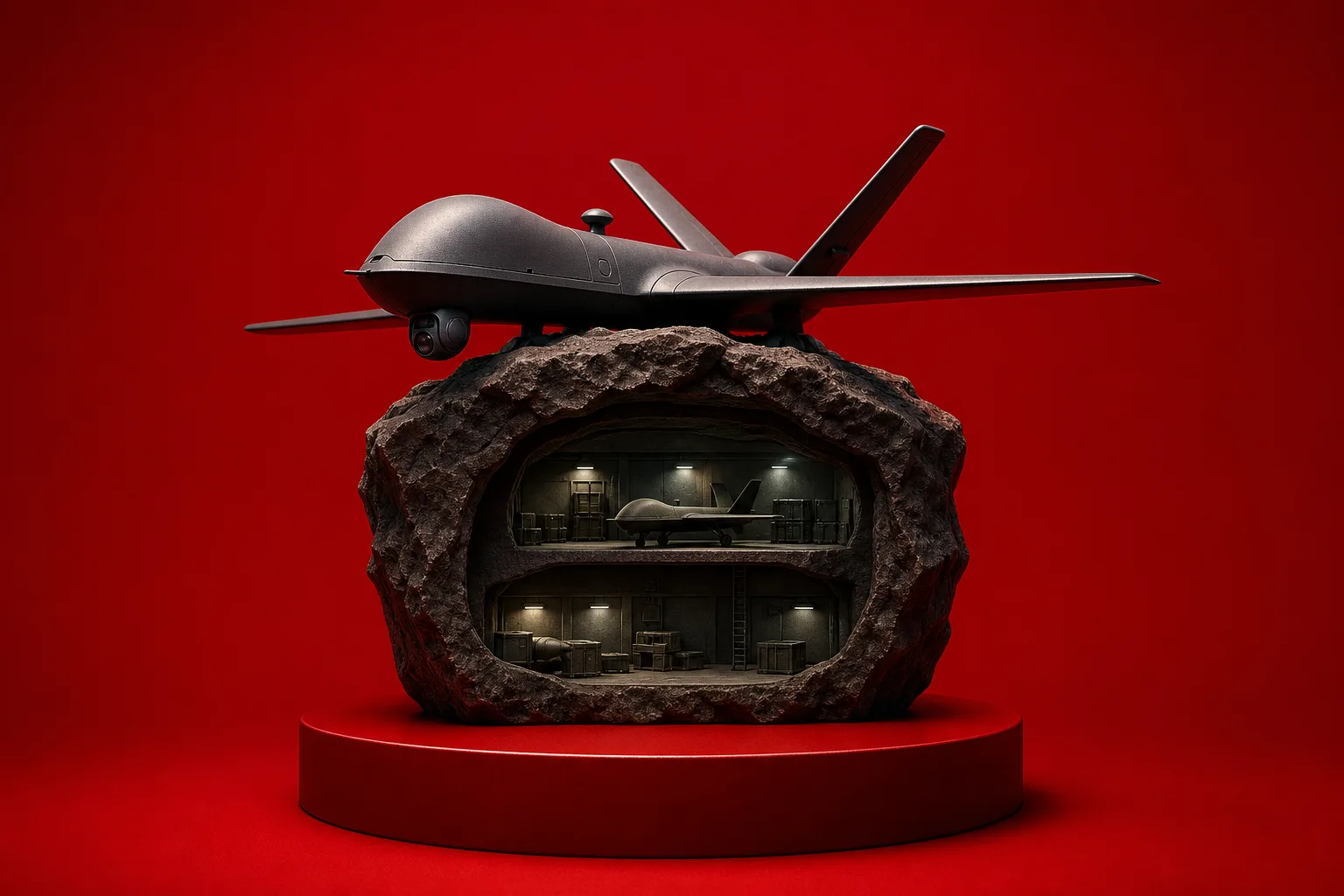
Israel says it has destroyed a large Hezbollah underground complex in southern Lebanon, a military action that could reshape security calculations along the country’s northern border. The site in Majdal Zoun was described as a 200-meter tunnel network extending more than 25 meters underground and linked to drone operations.
The demolition stands out not only for its scale, but for its timing. The operation took place despite a fragile regional ceasefire, signaling that Israeli leaders remain prepared to strike infrastructure they view as a strategic threat even when broader de-escalation efforts are in place.
For investors, the development matters because renewed cross-border military activity in the Levant can quickly spill into energy pricing, defense sector sentiment, sovereign risk assessments and broader Middle East geopolitical premiums.
Key Facts
- Israel said the underground complex in Majdal Zoun stretched roughly 200 meters and extended more than 25 meters deep.
- The site was allegedly used by Hezbollah to assemble, store and launch Iranian-sourced suicide drones.
- Israeli officials said the military notified U.S. officials before the demolition operation.
- The military said the tunnel contained hundreds of weapons and launchers.
- The operation was carried out by forces from the 551st Brigade Combat Team, Yahalom units and the 91st Division.
Israel-Hezbollah border conflict
The strike highlights a central reality of the Israel-Hezbollah border conflict: ceasefires can reduce open confrontation without eliminating the underlying military contest over territory, deterrence and force buildup. In this case, Israel framed the tunnel demolition as a preemptive move against infrastructure that could support future drone attacks on northern Israel.
The alleged presence of drone assembly and launch capabilities is especially significant. Low-cost unmanned systems have become an increasingly important feature of regional warfare, giving armed groups the ability to pressure civilian areas, military installations and critical infrastructure without relying solely on rockets or conventional artillery. A tunnel network tied to that mission would be seen by Israeli planners as a long-term operational threat rather than a symbolic target.
The broader significance is geopolitical as well as tactical. Southern Lebanon has remained a key flashpoint since the Gaza war expanded regional tensions, and any new military action raises questions about the durability of ceasefire arrangements, the role of external powers and the risk of miscalculation. Border-area insecurity can influence everything from shipping sentiment in the eastern Mediterranean to investor assumptions about political stability across the region.
The destruction of a 200-meter underground drone complex shows that the Israel-Hezbollah confrontation remains active beneath the surface, even when diplomacy appears to hold the line.
Why the tunnel matters
Underground infrastructure changes the security equation because it is designed to preserve capabilities through surveillance, airstrikes and pressure campaigns. A facility more than 25 meters deep suggests substantial engineering investment and points to a strategy focused on survivability, concealment and repeated operational use.
If the site did in fact hold hundreds of weapons and launchers, its destruction would represent more than a localized strike. It would indicate an effort to disrupt Hezbollah’s ability to regenerate drone-based pressure near the border, while also sending a message that reconstruction or rearmament in southern Lebanon will face continued military scrutiny.
Implications for Investors
For global investors, the most immediate effect is not likely to be on corporate earnings in Lebanon or Israel alone, but on risk pricing tied to the wider Middle East. Even limited military actions can reintroduce a geopolitical premium into oil and gas markets, particularly when investors are already sensitive to the possibility of escalation involving Iran-aligned groups. Energy traders will be watching whether the operation remains contained or triggers retaliatory steps.
Defense stocks may also stay supported if border tensions persist. Operations centered on drones, tunnels and surveillance reinforce demand themes around counter-drone systems, missile defense, precision munitions and battlefield engineering capabilities. Companies exposed to air defense and military technology could continue to benefit from elevated procurement expectations across the region and among Western allies.
At the same time, investors should monitor sovereign and currency risk in nearby markets. Heightened conflict pressure can affect tourism, insurance costs, capital inflows and regional project financing. The key watch-points are whether Hezbollah responds directly, whether diplomatic channels contain the fallout, and whether the security situation begins to affect transport corridors, energy infrastructure or broader regional alliances.
The next phase will depend on whether the strike remains a discrete operation or becomes the start of a new cycle of retaliation. Markets may stay relatively calm if the confrontation is contained, but any sign of sustained escalation could quickly lift regional risk premiums.