Lockheed Martin surged about 11% after delivering a second-quarter report that sharply exceeded expectations and reset the market’s view on the defense contractor’s growth outlook. The biggest headline was a record $230.4 billion backlog, supported by a $65 billion order quarter.
Revenue rose to $20.1 billion, up 11% year over year, while diluted earnings per share reached $7.94, well above the roughly $7.22 analysts had expected. Just as important for investors, free cash flow rebounded to $2.9 billion.
The market reaction reflected more than a simple quarterly beat. Lockheed Martin also raised its 2026 guidance for sales, earnings, and cash flow, suggesting stronger execution across key programs and improved confidence in converting demand into revenue.
Key Facts
- Second-quarter sales were $20.1 billion, up 11% from $18.2 billion a year earlier.
- Diluted EPS came in at $7.94, above the consensus range of roughly $7.11 to $7.28.
- Lockheed Martin generated $3.2 billion in operating cash flow and $2.9 billion in free cash flow during the quarter.
- New orders totaled $65 billion, lifting backlog to a record $230.4 billion.
- Full-year 2026 guidance rose to $79.75 billion to $81.75 billion in sales and $29.95 to $30.65 in EPS.
Lockheed Martin
The quarter marked a sharp reversal from the weaker first-quarter report that had raised concerns about growth, margin pressure, and cash generation. In the earlier period, revenue was soft, earnings missed expectations, and free cash flow turned negative. The second quarter reversed each of those pressure points at once, giving investors evidence that the earlier weakness was not the start of a broader deterioration.
The most significant driver was the combination of stronger sales and a large order intake. Lockheed Martin booked $65 billion of orders in three months, producing a book-to-bill ratio above 3 when compared with quarterly sales of $20.1 billion. That pushed backlog to $230.4 billion, a level that represents nearly three years of revenue at the company’s current annualized pace.
For investors, the quality of that backlog matters as much as the size. A major contributor was a $35 billion multi-year THAAD interceptor award, which boosted the Missiles and Fire Control segment. That business is becoming increasingly central to the company’s growth case as allied demand for missile defense, interceptors, and precision munitions continues to expand.
Lockheed Martin’s second-quarter results showed that demand is no longer just visible in the order book; it is now starting to flow through to revenue, earnings, and cash.
Why the missiles business matters most
Missiles and Fire Control posted $4.1 billion in sales, up 19% year over year, making it the fastest-growing major segment in the portfolio. Growth was tied to production ramps for PAC-3 and THAAD programs, as well as tactical missile demand. Segment backlog nearly doubled to $87.9 billion, underscoring how central missile defense has become to the company’s outlook.
That strength reflects a structural shift in defense spending. Demand for air and missile defense systems has increased as governments rebuild inventories, fund regional deterrence, and accelerate procurement across NATO-aligned markets. The main constraint is not end demand but manufacturing capacity, which means investors should focus closely on ramp execution over the next several years.
Implications for Investors
The raised outlook is the clearest signal from this report. Lockheed Martin now expects 2026 revenue of $79.75 billion to $81.75 billion, up from the previous range of $77.5 billion to $80.0 billion. EPS guidance increased to $29.95 to $30.65, while free cash flow guidance moved to $7.0 billion to $7.2 billion. A beat combined with a guidance increase often carries more weight than a one-quarter earnings surprise alone, because it implies confidence in execution through the second half.
Valuation remains a central question after the rally. At roughly $571, the stock trades around 18.8 times the midpoint of its updated 2026 EPS guidance of $30.30. That is not a bargain multiple for an industrial name, but it may still look reasonable given the record backlog, improving cash generation, and elevated defense demand backdrop. The forward free cash flow yield is around 5.4% based on the company’s updated targets.
Investors should still watch several risks. The first is production capacity, especially in missile programs where demand is rising faster than factories can scale. The second is execution risk on complex long-term contracts, where margin swings can emerge from cost revisions or delays. The third is capital allocation: Lockheed Martin is spending heavily to expand production and fund research while also supporting dividends, buybacks, and a planned $3.45 billion acquisition of Ultra Maritime that is not yet reflected in guidance.
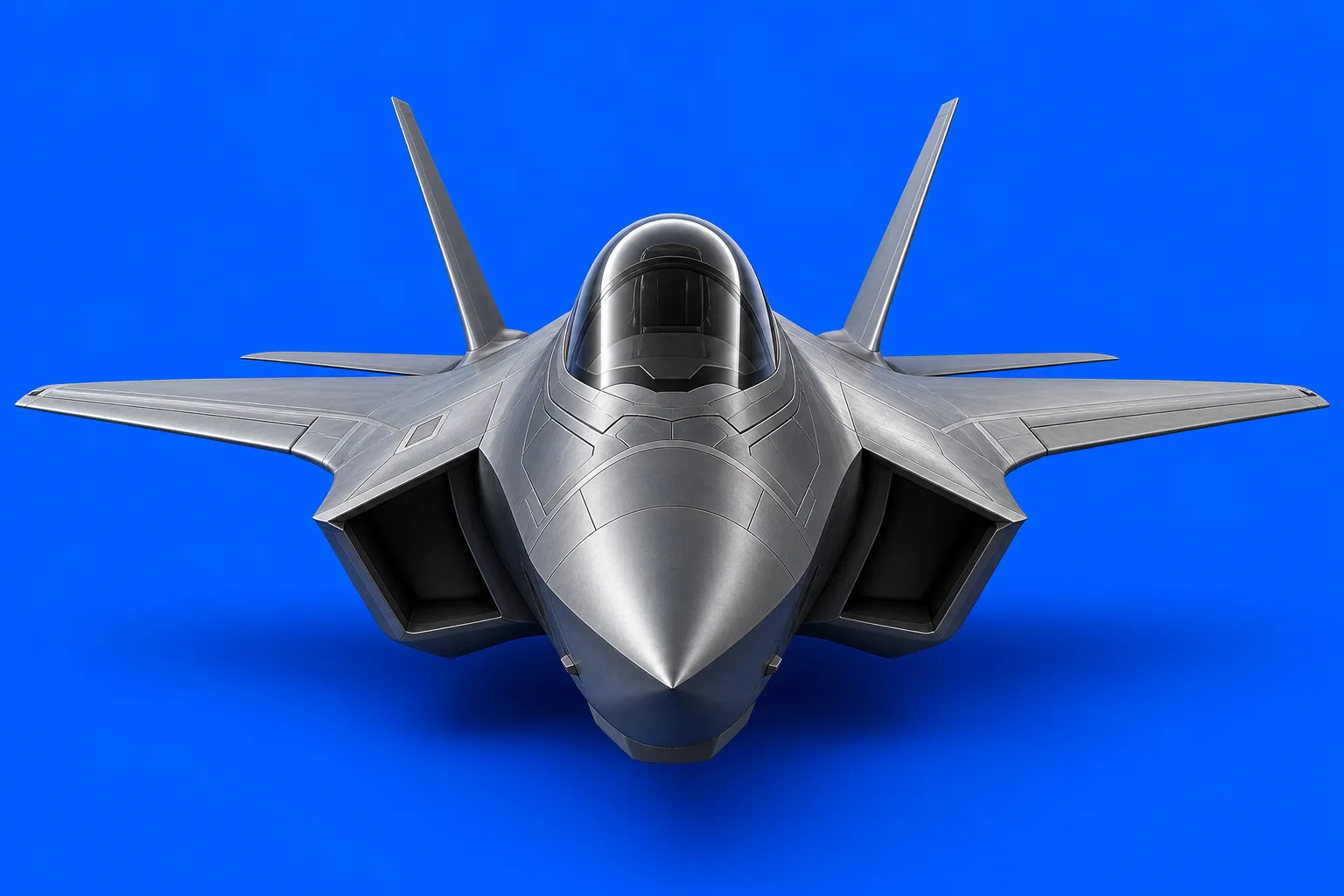
Aeronautics also remains important, even if missiles are driving the current narrative. The segment generated $8.1 billion in quarterly sales, up 9%, helped by higher F-35 production. Given that aeronautics still represents roughly 40% of company revenue, cleaner execution there reduces a major overhang on the stock. Rotary and Mission Systems and Space produced steadier, lower-growth results, which added to the sense of broader stabilization across the portfolio.
Looking ahead, the key issue is whether Lockheed Martin can turn its record backlog into sustained revenue growth without bottlenecks. If production ramps stay on track and cash conversion remains strong, the latest quarter may mark a broader re-rating rather than a one-day surge.