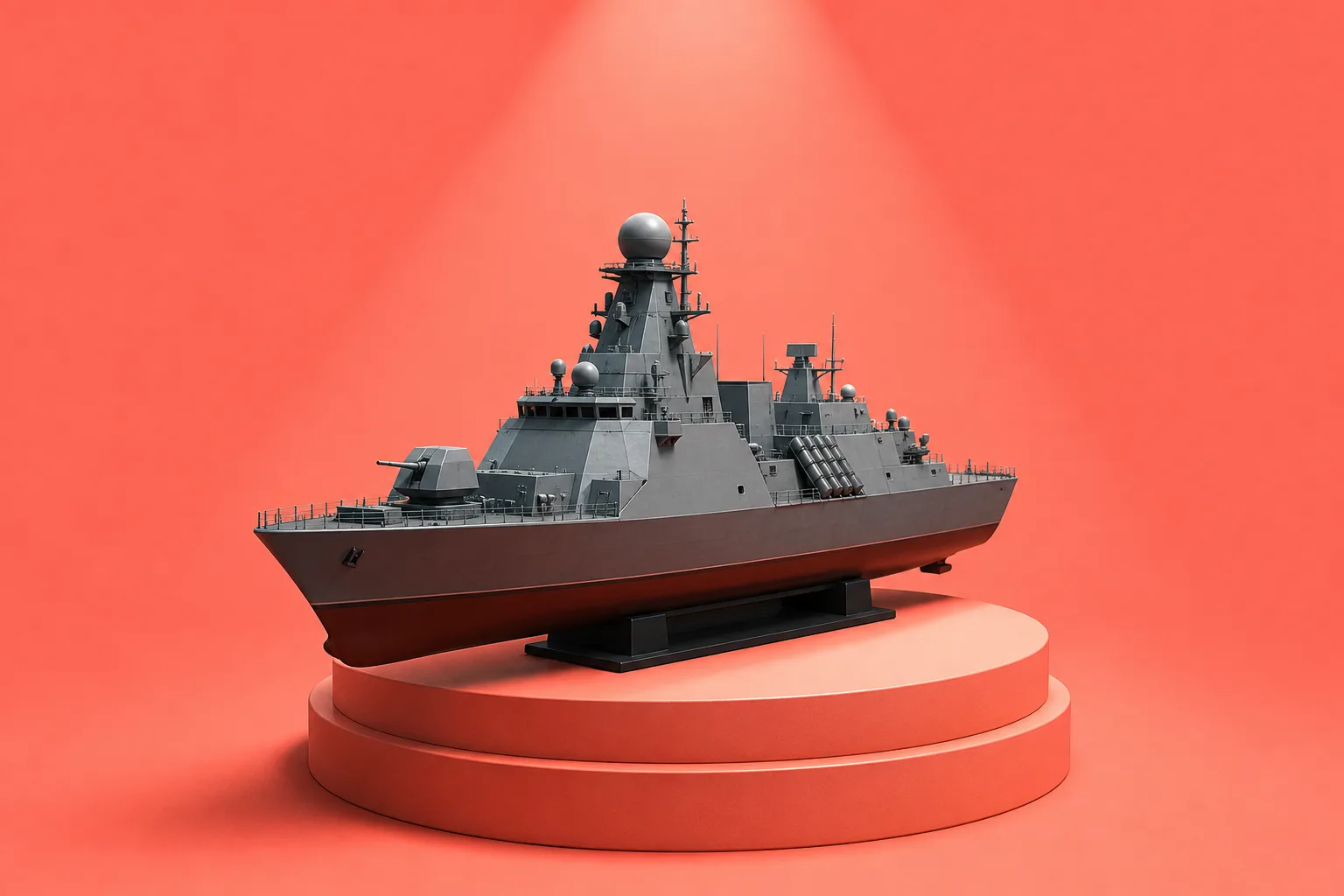
Russian warship explosion in Benghazi has opened a new front in the market’s assessment of maritime security risk tied to the Russia-Ukraine conflict. Libyan authorities in the east said a preliminary investigation pointed to an explosion aboard a Russian vessel at Benghazi’s naval base before dawn on November 22, 2026, with early suspicion falling on a drone strike.
The vessel was widely identified as the Merkury, a Project 20380 Steregushchiy-class missile corvette reportedly valued at about £150 million. If the loss is confirmed, it would mark a significant hit to Russian naval capability far from Ukraine’s coastline and in a port linked to military logistics.
No official casualty figure had been released by midday on November 22. But the scale of the fire, multiple reported blasts, and imagery showing the vessel ablaze have already shifted attention toward the vulnerability of Russian ships operating in the Mediterranean and adjacent supply corridors.
Key Facts
- Eastern Libyan authorities said the November 22, 2026 explosion in Benghazi likely originated aboard a Russian vessel and may have involved a drone strike.
- The ship was identified by multiple defense analysts as the Russian Navy corvette Merkury, a Project 20380 Steregushchiy-class warship with hull number 535.
- Residents reported three loud blasts and heavy anti-aircraft fire around the naval base before dawn.
- The Merkury had reportedly been in Benghazi for several days while escorting a convoy tied to Russian arms shipments.
- In a separate sign of wider pressure on Russian shipping, Baltic ports handled 65.3% of Russia’s seaborne grain exports in October, while Ust-Luga alone moved 684,000 tons.
Russian Warship Explosion in Benghazi
The immediate issue is whether the blast was an internal accident, an ammunition detonation, or an external strike. Benghazi’s civil defense service initially described the incident as an explosion at an ammunition store inside the naval base, later saying the fire had been contained. Subsequent statements from eastern officials indicated a preliminary belief that the Russian vessel itself was the center of the explosion.
That distinction matters. An onboard accident would highlight handling and storage risks around munitions and military cargo. A successful drone strike, by contrast, would signal a material expansion in the reach of anti-Russian operations into North Africa. Either outcome underscores the fragility of maritime logistics networks supporting arms transfers, naval deployments, and strategic shipping routes across the Mediterranean.
The parties most directly affected include Russian defense logistics, Libyan authorities controlling Benghazi port, insurers exposed to war-risk pricing, and commodity traders monitoring spillover into oil, refined products, and grain freight. While Benghazi is not a major global benchmark port, the symbolism of a Russian naval asset being damaged or destroyed there could alter risk calculations well beyond Libya.
Whether caused by sabotage, drone warfare, or a munitions accident, the Benghazi blast shows that naval logistics linked to Russia now face escalating vulnerability far from the main battlefield.
Why the incident matters beyond Libya
Benghazi sits inside Libya’s fractured political geography, where eastern forces aligned with Khalifa Haftar have maintained longstanding ties with Moscow. That has made the port strategically relevant not just for local security, but also for Russian access, resupply, and influence in the Mediterranean basin.
The event also fits a broader pattern of reported attacks on Russian-linked vessels. In March, the Russian-flagged LNG tanker Arctic Metagaz exploded between Malta and Libya. More recently, the cargo ship Sparta II was reportedly disabled near Russia’s maritime border in the Baltic region, and the corvette Naro-Fominsk was also cited in another strike. Taken together, the incidents suggest a widening map of operational pressure on Russian maritime assets.
Implications for Investors
For investors, the most immediate takeaway is not the standalone military loss but the growing risk premium attached to shipping routes, port infrastructure, and cargoes linked to conflict zones. War-risk insurance, vessel routing costs, and charter rates can all react when attacks appear to spread across theaters. Companies with exposure to Mediterranean, Black Sea, or Baltic logistics may face higher operating uncertainty.
Commodity markets are also likely to keep a close watch on any sign that maritime disruption is migrating toward export corridors. Russian ports remain critical for crude oil, refined fuels, and grain. The fact that Baltic ports accounted for 65.3% of Russia’s seaborne grain exports in October, with volumes up 8.7 times from a year earlier, shows how concentrated flows have become. Any sustained threat to naval escorts or support shipping could amplify freight volatility even without a direct shutdown of cargo terminals.
Defense and security names could see renewed investor interest if governments and shipping operators respond by increasing spending on air defense, drone countermeasures, surveillance, and port protection. At the same time, investors should distinguish between short-lived headline reactions and structural repricing. Confirmation of the vessel’s fate, the cause of the blast, and any retaliatory steps by Moscow or regional actors will determine whether the market treats Benghazi as an isolated shock or part of a lasting pattern.
The next signals to watch are official confirmation on the Merkury, any change in Russian deployment patterns, and shifts in maritime insurance pricing across the Mediterranean and Baltic routes. If the incident proves to be an external strike, investors may need to reassess how far conflict-driven shipping risk now extends.